Back to Portfolio
Using research-driven content to improve programmer tasks
Content design
User research
Workflow improvement
Context
The goal of this product, z/OS Management Services Catalog, is to help new programmers be productive with guided, informative workflows that reduce risk. The tools helps turn common programmer tasks that are historically done on a green screen into templated, repeatable services.
Our beta program revealed the the samples created by the development team were not user-friendly and sometimes technically insufficient:
User quotes:
“Yeah, it’s is way more complicated than this.”
- User reaction to a sample service
“I need to look up these options… I don’t know what they mean.”
- User response to an input field
My task was to redesign the sample services content to make them functional and user-friendly. Through this work I also developed a new, repeatable process for creating sample services that is rooted in research and content design principles.
Aligning on human-centered intent
I facilitated a team retrospective to understand what went wrong and align us on a productive solution.
Key outcomes:
- Design had assumed the services were more straightforward to build
- Documentation is insufficient for understanding the programmer task
- Development did not have skills or resources needed to cover the scope
Interviewing experts to understand the task
I created a standard protocol and synthesis template for interviewing experts about the tasks.
Goals:
Identify steps of tasks
Identify variables that need user input
Highlight areas of difficulty or risk
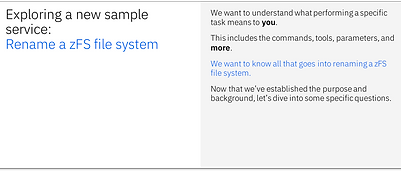
Image: Slide from interview template

Image: Slide from interview template

Image: Interview synthesis template in use
Prototyping the service
With the steps of the task fully mapped out, I began prototyping the architecture and content for user inputs.
My UX writing approach was to:
- Reduce chances of errors
- Remove unnecessary choices
- Provide users necessary context and information without overloading text
The affordances within the design I had to achieve these goals were:
- Information architecture: Pages, Input order, Input logic
- Assistance: Helper text, Placeholder text, Default values
- Constraints: Min/max values, Character limits/types, Error states

Image: Work-in-progress prototype of a service
Outcomes and impact
Our next release included two new sample services, both of which received positive user feedback. The team also reported a smoother, more collaborative experience using the new creation process.
Each service was informed by three SME interviews that shaped the service structure and parameters, and validated by six usability tests. This ensured the services were technically accurate, easy to follow, and aligned with user expectations.
During SME interviews, we learned that a third planned service was not feasible, due to the variability of customer systems. Based on this insight, we made the strategic decision not to build it, saving the team significant time and effort
Through this process, engineering saw firsthand the value and impact of content design and research. This shift helped reduce rework, strengthen accuracy, and improve the overall quality of the services we released.
I also formalized the content patterns into my existing product product style and UX writing guide.

Image: Additions to the product style guide specifically for sample services